Trout commonly have some external parasites. But when the conditions are favorable, these parasites can flourish, causing substantial trout mortalities. Visual signs of parasites are easily recognized once you are familiar with the symptoms. "Jumping", "flashing", and "darting" (erratic bursts of activity) by the trout can be signs of external parasites.
The external parasites of trout that are a concern in North Carolina include Costia (Ichtyobodo), Ich (Ichthyophthirius multifilis), Episistylis, Trichodina, Ambiphrya (Scyphidia), and Gyrodactylus. All of these parasites can usually be controlled with one flow-through treatment of formalin (Table 1) except Ich. Ich has three life stages, one life stage is not susceptible to formalin treatments. For this reason, control of Ich requires three or four treatments with formalin at intervals based on the water temperature (Table 2).
Before applying formalin, it is best to apply a salt treatment first. Due to the irritation caused by the parasites, trout increase mucus production. Under these conditions, the parasites can become surrounded by mucus, decreasing the parasite's susceptibility to the formalin treatment. Prior to the formalin treatment, apply 1 pound of salt for every 2 gallons per minute of water flow. About an hour or more after applying the salt, begin the formalin flow-through treatment. Minimize the stress the trout are subjected to by treating when the water temperatures are coolest in the summer months and keeping the fish off feed for 1-2 days prior to and during the treatment.
Generally siphoning or drilling a hole in the bottom of the formalin container will not deliver the formalin at a uniform rate. A turkey fount (waterer) can be used to deliver the formalin at a uniform rate. To dispense about 7 gallons of liquid, drill a 3/32 inch hole. The hole may need to be enlarged slightly to dispense 7 gallons in one hour. Calibrate the formalin dispenser to ensure a known amount is delivered in one hour. Various size turkey founts can be found at most agricultural supply stores or catalogs. A 7-gallon turkey waterer costs about $50.
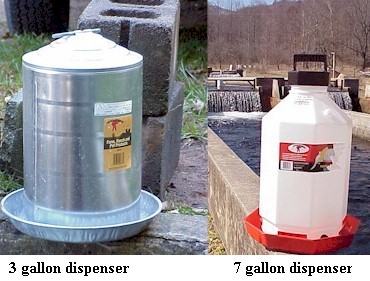
Table 1 - Formalin Flow-Through Treatments for One Hour
for External Parasites on Rainbow Trout:
Below 50F - 250 ppm
50F-65F - 170 ppm
Treatment calculation:
In order to calculate the volume of formalin required it is necessary to know the flow rate (in gpm), the treatment time in minutes and the desire treatment rate in ppm (parts per million).
Volume in gal = Flow rate X Treatment Time
Formalin is considered 100% active ingredient because it is a saturated aqueous solution of formaldehyde gas. It has a specific gravity of 1.08.
Conversion factor to convert gallons to milliliters = 0.003785
Treatment amount = (Volume x Treatment Rate x 0.003785)/1.08
* at warmer water temperatures, it may be necessary to treat for longer periods at low concentrations (i.e. 24 hours at 25-35ppm)
Do not treat formalin-sensitive trout
- 128 ozs = 1 gallon
- 3785 ml = 1 gallon
- For additional flows (i.e. 1250 gpm & 250 ppm), add treatment volumes:
15 galllons + 3.0 gallons + 96 fluid ounces = 18 gallons 96 fl. ozs. or 18.75 gallons
- For some parasites (Ich), repetitive treatments may be necessary. Use the following information as a guide for treatment intervals. You may need to consult with a fish health professional.
Table 2 - Formalin Flow-Through
Treatment Interval
| Water Temp oF | Treatment Interval |
|---|---|
| 65-74 | Skip 1 Day |
| 55-64 | Skip 2 Days |
| 45-54 | Skip 3-4 Days |
(Some of the information for this article was obtained from Andrew Mitchell, Fishery Biologist, U.S. Fish and Wildlife Service, Stuttgart, Arkansas)
Use of Formalin to Control Fish Parasites